
Irrigation Principles | Soil and Plant Fundamentals

Soil and Plant Fundamentals

The soil-water-plant-atmosphere continuum is a constant gradient of water potential, essentially a constant pull or suction.
The atmosphere is constantly pulling water from the plant and to compensate the roots are pulling water from the soil.

Irrigation needs to replenish the water that the soil loses, therefore knowing soil composition and crop water demand (the amount of water a crop needs to grow healthily and complete its life cycle without water stress) determines when and how much to irrigate.
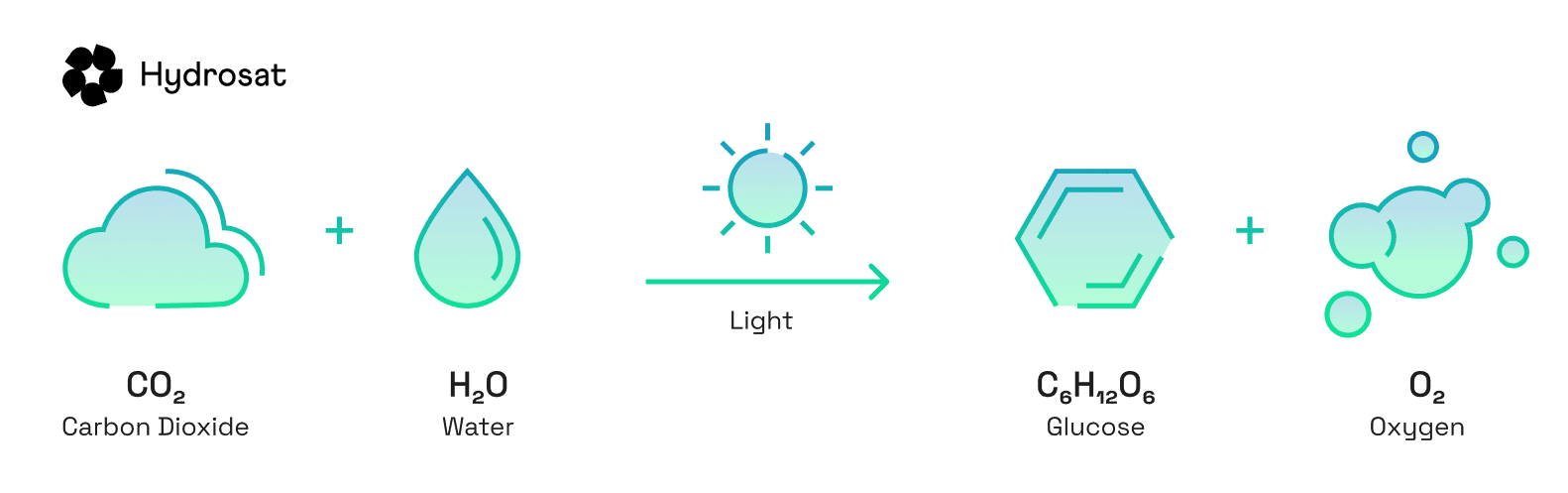
Crop water demand is the cumulation of water being used for many important functions within plants:
         1. transporting minerals from the soil
         2. cooling the plant
         3. keeping the cells within the plant rigid so it doesn’t fall over 
         4. most importantly, it is one of the inputs for photosynthesis (the process in plants that produces their ‘food’ from water and CO₂)

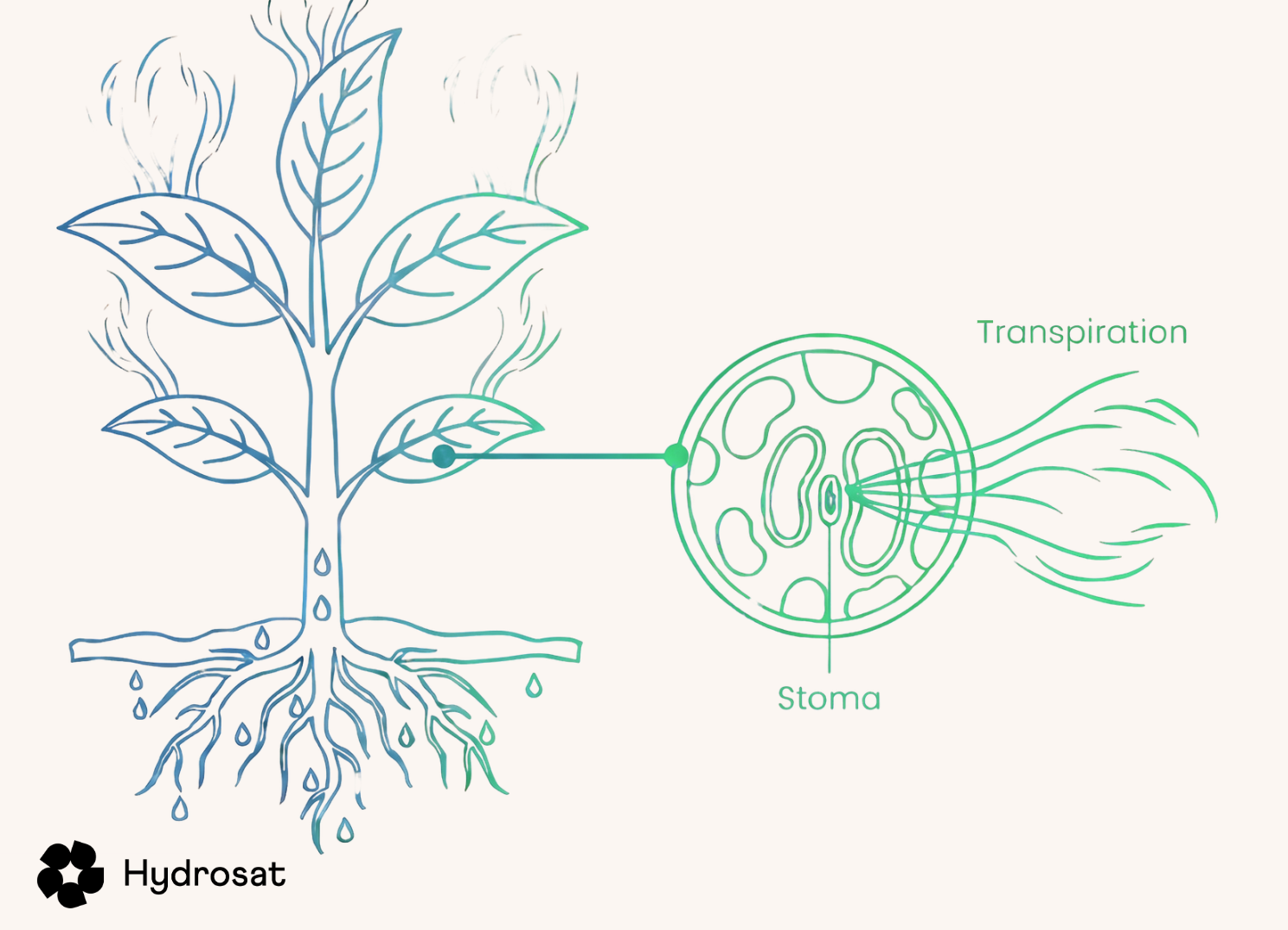
Only about 1 - 5% of water taken up by the plant is consumed in photosynthesis; the rest is lost via transpiration from stomata (pores predominantly on the bottom of leaves which can open and close).
This links water intake, photosynthesis, stomata and ET allowing us to relate surface temperature to root zone water availability.

Stomata open to let in CO₂, and release O₂ as a bonus, but as the stomata open, some water is evaporated from inside the leaf and escapes from the stomata as water vapour. This is the transpiration aspect of ET.
To compensate for the loss, the roots absorb water to replace what has been lost. This makes ET, measured by our satellites thermal data, a powerful proxy for understanding how much water the crop is actually consuming from the soil.

     
 Soil acts as a reservoir of water therefore soil moisture should be kept within certain limits to avoid plant water stress.
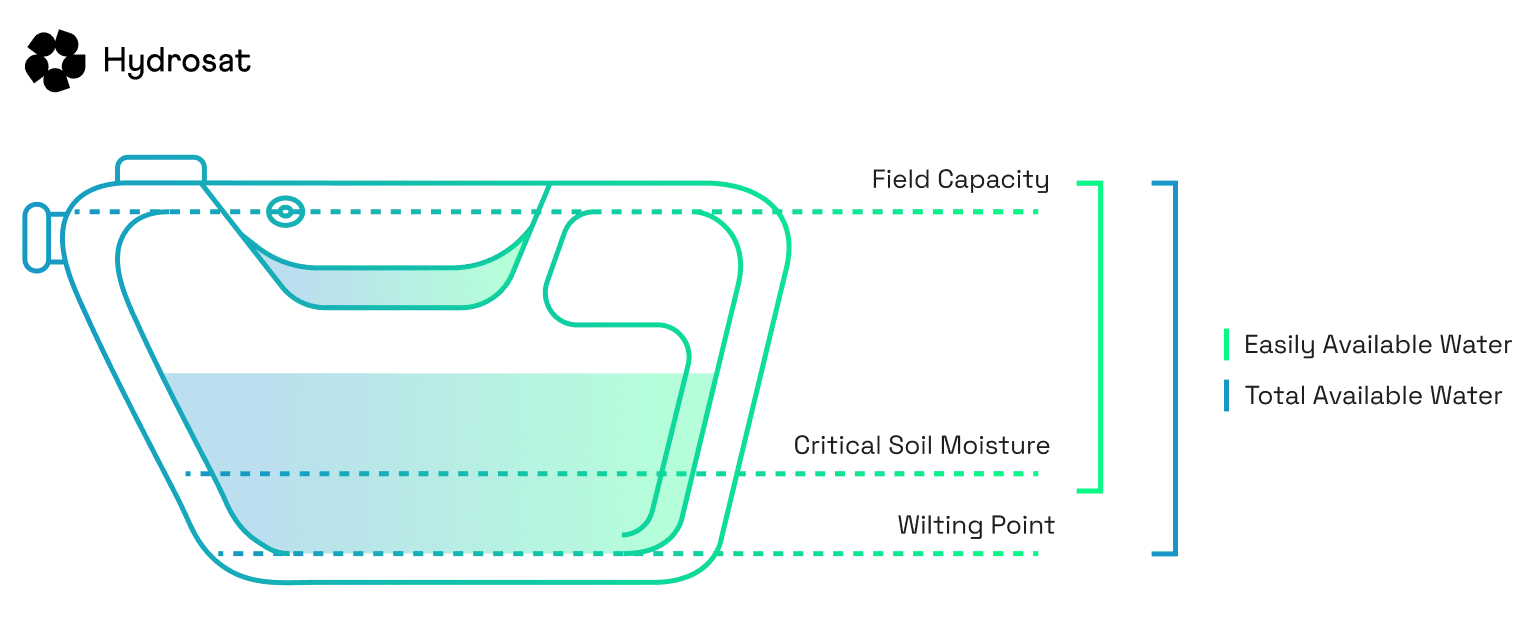
The soil moisture needs to be kept under field capacity (the maximum amount of water the soil can hold before percolation occurs) but above the wilting point (the minimum soil moisture level required to prevent plants from wilting due to water stress). This goldilocks zone is known as the band of total available water and keeping your field within this requires precision irrigation. It is important to maintain water levels within this band to prevent irreparable damage to crops.

It is even more ideal if water levels can be kept in the zone of readily available water. This is between field capacity and ‘critical’ soil moisture, the point during soil drying when plants first begin to experience water stress, whereas the wilting point is the point where plants can no longer extract water at all. The critical threshold occurs well before the wilting point and marks the onset of physiological stress; the wilting point marks the end of the total available water.


 You can think of it like the petrol tank in your car: you don’t want to overfill the tank as petrol will be wasted spilling onto the floor, but you don’t want the tank becoming empty as you’ll end up stuck. So it’s always good to top up the tank before it’s empty so you’re never at risk and remain stress free.
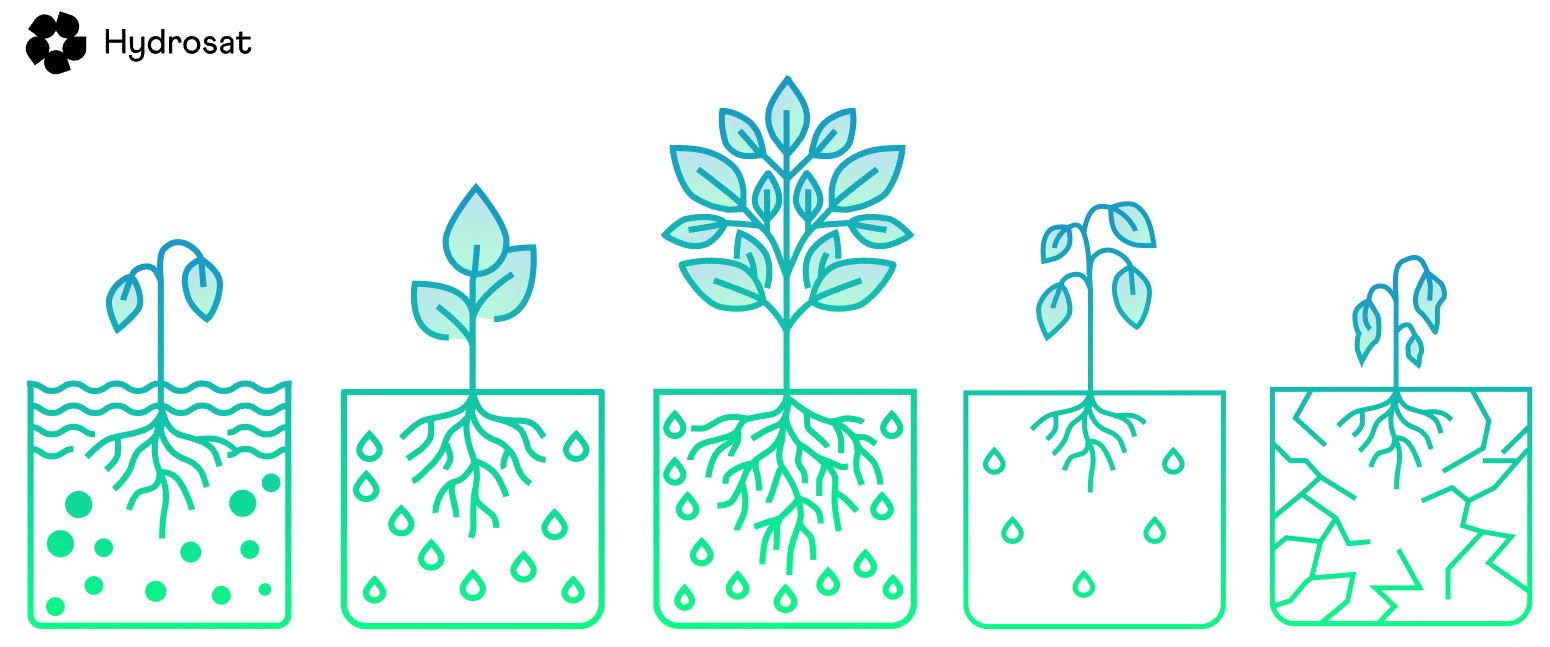
There are five zones of soil moisture, from waterlogged to bone dry:

1.   The plant can be stressed from excess water as the ground is over-saturated

Soil moisture is above field capacity and is therefore wasted through percolation.
Roots need oxygen to function, but water is filling all pore spaces in the soil so there isn’t any oxygen available.

Over-saturation = too much water, so much so that the plant no longer has access to oxygen

2.   The plant can be healthy, but the ground is saturated 

Soil moisture is above field capacity and is therefore wasted through percolation.
The soil is still saturated but not to an extent where oxygen is no longer present.

Saturation = above field capacity, water is wasted

3.   The plant can be healthy with perfectly saturated soil 

Soil water levels are in the band of readily available water.
Oxygen is also freely available.

Healthy = water is in the zone of readily available water

4.   The plant can be stressed from not enough water being available for growth 

The soil water level dropped below the critical soil moisture level, water is present but is held tightly by soils making it difficult for root extraction.
This can be made worse by increased atmospheric demand, like when it gets very hot or there is low humidity.

Stressed = not enough water available, water levels are between the critical soil moisture and the wilting point

5.   The plant is over stressed due to water unavailability

The soil water level dropped past the permanent wilting point where water is held so tightly by soil pores that roots cannot extract anything.
If soil moisture stays here, the plant permanently wilts and dies.

Over-stressed/ dry = water level is below the wilting point
The amount of readily available water/ plant available water is dependent on soil characteristics (composition, texture, organic matter, etc.)

Soil reservoir capacity

A sandy soil has a lower field capacity than a clay soil due to larger pores in the soil meaning percolation can happen a lot easier 

Soil retention capacity

A sandy soil has a lower wilting point than a clay soil as plants don’t have to use such strong extraction force due to lower water retention forces (clay soil pores are smaller, so water binds stronger to the soil making it harder for the plants to extract the water)
Some plants are better at extracting water than others so this can have a big impact depending on the crop planted (rice and strawberries are examples of crops with poor water extraction force whereas barley and avocados are the opposite)
Good irrigation management means ensuring the soil moisture stays below the field capacity and above the critical soil moisture to  avoid over-irrigation and crop stress, with the timing and volume determined by the crop's water demand and the soil's specific characteristics.

Want to learn more? Click below to read about another linked topic

Help us
Improve

Your feedback helps us make our Academy more useful. Tell us about your experience and what you'd like to see next.

Share With
Your Network

Know someone who could benefit?
Share the IrriWatch Academy with your colleagues and network.