The Core Principles of SEBAL
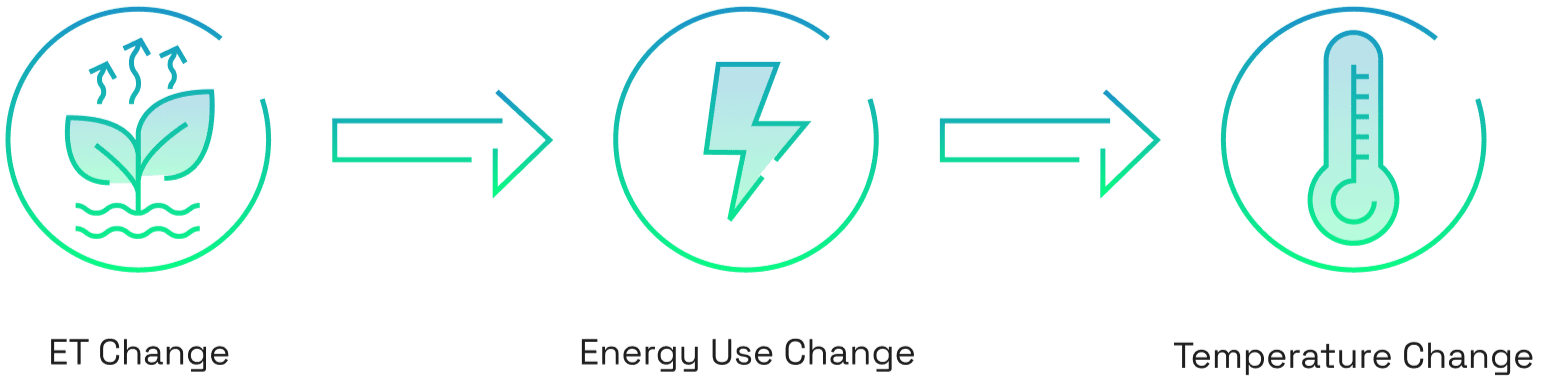

ET is related to crop water consumption through processes that happen within the crops themselves.
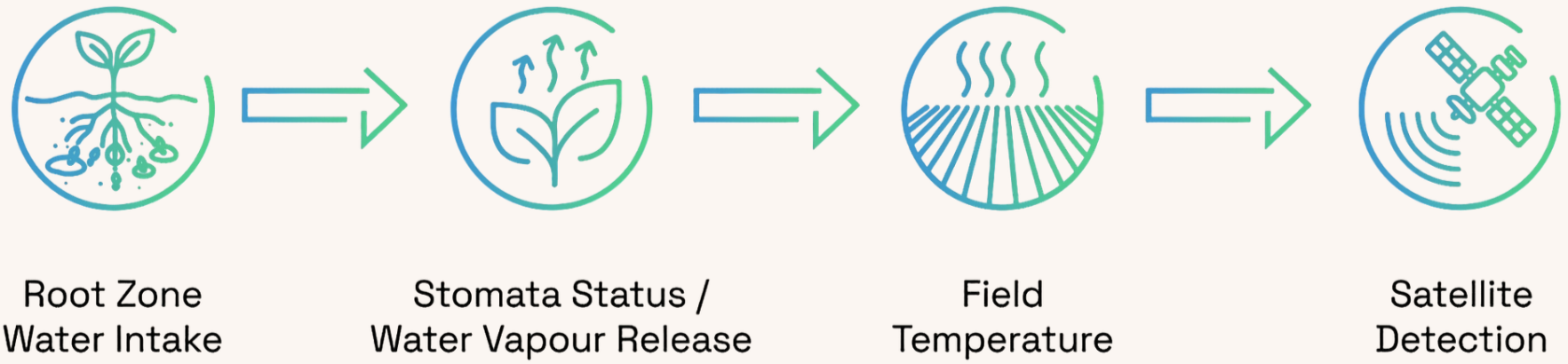
As covered in Irrigation Principles, plant stomata open and close to intake CO₂ and release water vapour and O₂. Plant stomata and roots communicate to ensure the right amount of water vapour is being released in relation to the water uptake of the roots, as to not leave the plant in a deficit. Therefore, if there is not enough water uptake by the roots to balance out the amount leaving the plant as water vapour, the roots will send a signal to the stomata to close to prevent a water deficit.
However, the crop is still being subjected to the radiation from the sun, and this energy – normally used to drive evaporation, turning water from the roots into water vapour leaving the plant – has nowhere to go. This results in the temperature of the crop’s surface increasing, which is what is identified by the thermal infrared satellites and is fed into the SEBAL model.
You can think of it similar to the mechanics of getting rid of an illness in the human body: when you’re ill, your body increases in temperature as it’s trying to fight off the sickness, but then, when you’re sweating (the equivalent of the plant releasing water vapour due to returned water at the root zone) you begin to cool down and the illness has passed.